I. The Overpainted Canvas
The sharp, antiseptic bite of mineral spirits on Elena’s tongue clashed with the heavy, floral weight of the lilies sitting in a glass vase across the room. It was the smell of restoration—preservation through chemical warfare. She worked with the steady grace of a surgeon, her thumb, marked by a permanent smudge of midnight-blue ink, pressing a cotton swab against the flaking surface of a seventeenth-century oil study.
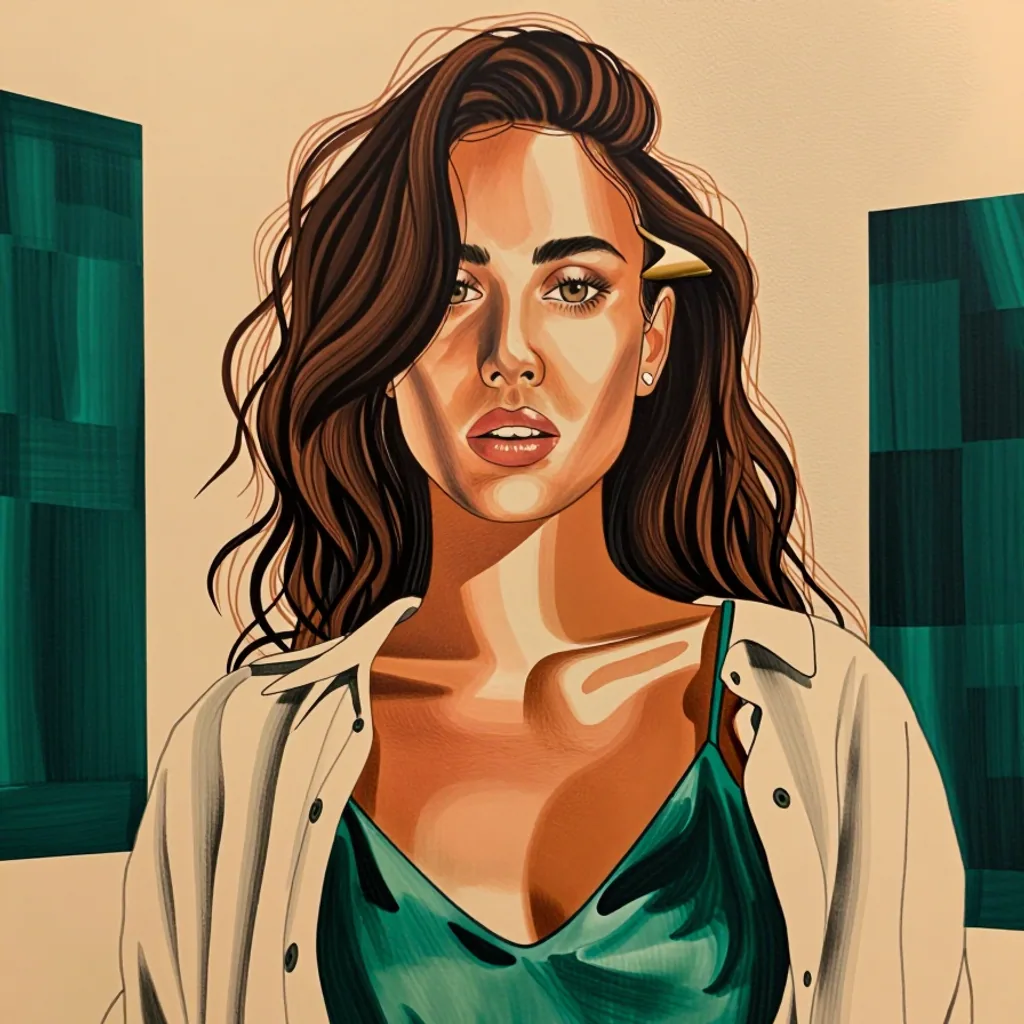
The gold light of the late afternoon poured through the floor-to-ceiling windows, thick as honey, catching the stray fibers of her cream linen shirt. It draped loosely over the emerald silk of her slip dress, the fabric cooling against her skin as she moved. She took a shallow breath, steadying her hand. A single mistake, a millimeter of over-pressure, and the crackle of the dried pigment would flake away into nothingness, lost to the history of the canvas forever.
She preferred it this way: the minute, manageable task of holding back the decay.
The studio was her sanctuary, a place of calculated variables. Here, every brushstroke had a purpose, every solvent a known quantity. She liked the solitude of it. It allowed her to inhabit the space between the artist's intent and the physical reality of the paint. It was a controlled existence, one she guarded with a fierce, quiet intensity.
Then, the floorboards shivered.
It wasn’t a sudden noise, but a shift in the atmospheric pressure of the room. A low, subterranean vibration rolled through the foundation, traveling up through the soles of her feet and into the marrow of her shins. It was the cello—deep, resonant, and aching with a minor key that seemed to pull at the air in her lungs.
Elena paused, her swab hovering a fraction of an inch from the canvas.
The sound came from the apartment adjacent to hers. It wasn't just music; it was a physical frequency. It vibrated against the easel, making the wood hum with a steady, rhythmic pulse. It felt like a heavy hand resting on her shoulder, a constant, grinding pressure that bypassed her ears and went straight to her sternum.
She didn’t move for a long minute. She watched a speck of dust dance in a sunbeam, caught in the wake of the sound waves. The note was thick and grainy, like velvet rubbed against raw wood. It possessed a deliberate weight, an intentionality that made her own careful movements feel suddenly brittle.
She set the cotton swab down in its ceramic tray with a soft *clink*.
The silence she usually craved was gone, replaced by this intrusive, beautiful intrusion. It felt less like a neighbor practicing and more like a confession being whispered through the drywall. She found herself turning toward the wall, her spine straightening as she leaned against the cool plaster.
She closed her eyes.
The music moved from a mere sound to a sensation of proximity. She could feel the vibration in the bridge of her nose, the hollow of her throat. It was an invasive intimacy, a stranger’s interior world bleeding into hers. She focused on the way the cello's bow pulled against the strings, imagining the friction of horsehair on gut—the resistance, the tension, the slight snap of a note breaking into its neighbors.
She could almost see the man behind it, though he remained a phantom in the next room. He was creating a landscape of shadow and curve that she couldn't see but could certainly inhabit.
Her pulse slowed to match his tempo. It was a strange, involuntary mirroring. Her breathing deepened, her chest expanding against the linen of her shirt, each exhale carrying away a bit of the tension she carried in her shoulders. She felt the resonance in the small bones of her hands, the very fingers that spent their days meticulously fixing the past.
The sonata shifted. It became more frantic, the notes climbing in pitch until they felt sharp, almost tactile, like the prick of a needle. The vibration in her chest grew more insistent, a thrumming that made her skin feel tight, sensitized. She didn't move. She stayed pressed against the wall, her head tilted back slightly, letting the sound wash over her.
It was an unraveling. For years, she had curated this life—a series of precise boundaries between what was hers and what belonged to the world. But the cello didn't care for boundaries. It moved through walls and across floors, demanding entry into the quietest corners of her studio.
She felt a sudden, sharp awareness of the space between her and the wall, the heat of her own skin, the way the silk of her dress slid over her hip as she shifted her weight. The music was stripping away the layers of her professional detachment, leaving only the raw, sensory reality of the moment.
The notes began to decelerate, stretching out until each one was a long, grieving thread of sound. The cello seemed to be searching for a finality, the vibrations becoming slower, more deliberate. Elena felt it in the hollow of her collarbone, a deep, rolling tremor that eventually subsided into a faint hum, then a ghost of a feeling.
She stood there, perfectly still in the center of the room as the golden light began to fade into amber. The final note lingered, hanging in the air like the scent of woodsmoke. It didn't just stop; it decayed, settling into her bones until the last microscopic tremor vanished.
The silence returned, but it was different than it had been before. It wasn't empty anymore. It felt heavy, saturated with the residue of the music.
Elena kept her eyes closed for several more seconds, her breath held in the back of her throat. She could feel the phantom vibration still echoing in her fingertips, a lingering hum that made her want to reach out and touch something—anything—solid.
She opened her eyes and looked at the canvas. The painting was still there, cracked and waiting for her repair. But as she looked at the small, blue stain on her thumb, she realized her hands were trembling. Just a fraction.
The sanctuary had been breached. The wall of her solitude wasn't broken, but it had been thinned, worn down by a frequency she hadn't invited in, yet couldn't bring herself to turn away.
She stood in the center of the studio, her chest rising and falling in a slow, deliberate rhythm, listening to the sound of her own heartbeat trying to find its way back to a steady beat.